


Serum-Free Light Chain Assay Recommended for Monoclonal Gammopathies
By Biotechdaily staff writers
Posted on 06 Nov 2007
A serum-free light chain (FLC) assay, in conjunction with serum protein electrophoresis and immunoelectrophoresis, is recommended in the initial diagnostic screen for monoclonal gammopathies. The serum-free light chain assay is also recommended for the initial investigation of myeloma.Posted on 06 Nov 2007
Monoclonal gammopathy of undetermined significance (MGUS) is often identified as a result of routine blood tests, or medical care related to another problem. To diagnose this condition, a blood test called serum protein electrophoresis is performed, which separates blood proteins into five parts. If a person has monoclonal gammopathy, an abnormal protein will show up. Specialized tests are then performed to further identify the abnormal protein. In many cases, patients who have the condition do not experience any symptoms.
Because renal function affects the level of free light chains excreted into the urine, free light chains are most appropriately measured in serum specimens, a fact that further reduces the need for urine studies. Recent studies at the Mayo Clinic (Rochester, MN, USA) demonstrated that the use of serum-free light chain analysis provides superior patient care.
Addition of the serum-free light chain assay eliminates the need for obtaining a 24-hour urine sample, which is inconvenient for patients to collect, and reduces the laboratory workload by removing the need to process urine samples.
Because the protein level can change, it is important to have it checked regularly. Any problem can then be detected early and appropriate evaluation and treatment can begin. No treatment is required for the abnormal protein, unless the condition progresses to multiple myeloma (MM) or another form of cancer. In the majority of patients this progression does not occur.
The serum-free light chain analysis provides a risk assessment for progression of MGUS to MM, and the serum-free light chain assay can be used to monitor the disease course in patients with a monoclonal protein that cannot be measured by protein electrophoresis.
Related Links:
Mayo Clinic


Platinum Member

ADAMTS-13 Protease Activity Test
ATS-13 Activity Assay

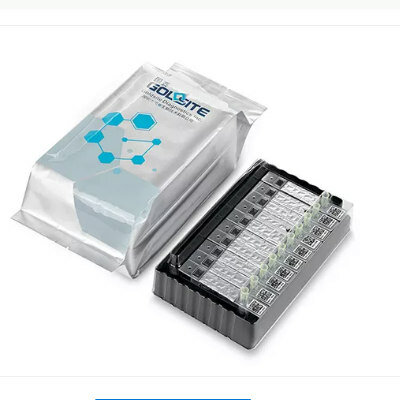

Complement 3 (C3) Test
GPP-100 C3 Kit
.jpg)
Gold Member

Rheumatoid Factors (RF) Test
Rheumatoid Factors (RF)


